Junagadh sits at the foot of Girnar, the highest mountain in Gujarat and a sacred one for Hindus and Jains alike. It is one of the oldest continuously lived-in towns in the state, and it shows: a fort with rock-cut caves and stepwells, an edict carved on Ashoka’s orders in the third century BCE, and some of the most unusual buildings in Gujarat, all within a few kilometres of each other.
It is also close. At about two hours from Rajkot, it is the one major destination in Saurashtra that works comfortably as a day trip, and it is on the way to Somnath and Gir if you are going further.
Girnar and the ropeway
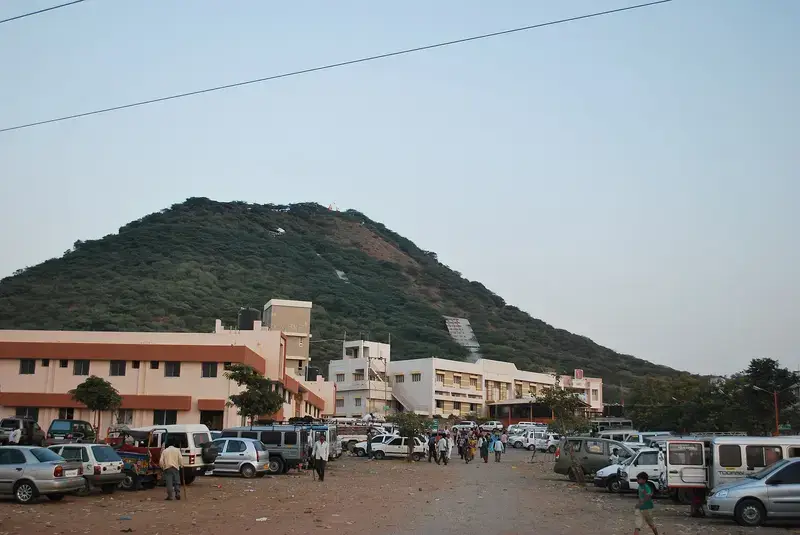
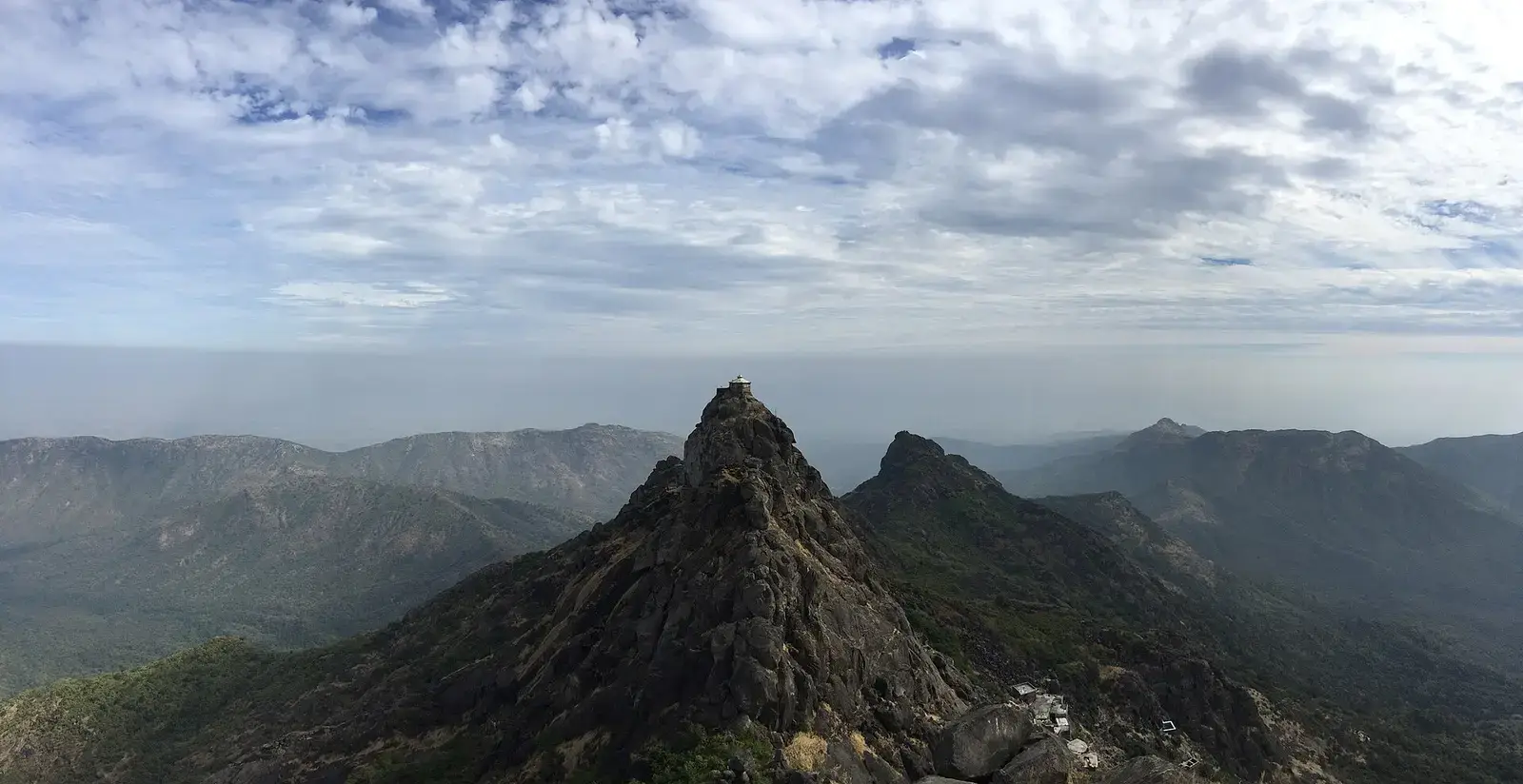
Girnar is a cluster of peaks with temples on the summits, reached by a stone stairway of roughly ten thousand steps from the Bhavnath area at the foot of the hill. The Jain temples come first, partway up; above them are the Amba Mata temple and, highest of all, the Dattatreya peak.
The ropeway, opened in 2020, runs from the base to the Amba Mata temple in a few minutes and has changed what is possible in a day. Most visitors now ride up, visit the Jain temples and Amba Mata on foot, and ride down. The Dattatreya peak is still a long climb of several thousand steps beyond the ropeway, and most visitors leave it out.
Ropeway queues are long at weekends and on festival days, and services pause in strong wind. Go early, and book tickets online where that is available.
If you plan to climb the whole stairway, start before dawn. The steps are exposed and the heat builds quickly by mid-morning.
Uparkot, the edicts and the town
Uparkot Fort sits on a plateau above the old town, and its origins are traditionally dated back more than two thousand years. Inside are Buddhist rock-cut caves, the Adi Kadi Vav and Navghan Kuvo stepwells cut straight down into the rock, and views across to Girnar.
On the road to Girnar, a boulder carries rock edicts of the emperor Ashoka from the third century BCE, with later inscriptions from the Rudradaman and Skandagupta eras on the same stone. It is a small building around a large rock, and one of the most significant historical sites in western India.
Mahabat Maqbara, the nineteenth-century mausoleum of the Nawabs, has spiral staircases winding around the outside of its minarets and looks like nothing else in the state. It is in the middle of town and takes fifteen minutes.
Sakkarbaug Zoo, one of the oldest in India, has a breeding programme for Asiatic lions — a useful stand-in if a Gir safari is not on the plan.
Getting there and fitting it in
From Rajkot it is about 100 km through Gondal and Jetpur, roughly two hours on good highway.
For a day trip, leave Rajkot by 6 am, take the ropeway before the queues, and do Uparkot, the edicts and Mahabat Maqbara in the afternoon. Keep the car for the day — the sights are spread out and the driver can wait at each.
Junagadh is also the natural first stop on longer trips. Sasan Gir is about 65 km on and Somnath about two hours, so many people break a Gir or Somnath journey here.
When to go
- October to MarchBest timeThe comfortable window for the climb and the fort, with clear views from the top.
- Lili Parikrama, around Dev Diwali in NovemberFestivalA walk of roughly 36 km around Girnar that draws very large crowds over several days. Extraordinary to see, but the roads and the ropeway are crowded — plan around it or lean into it.
- Mahashivratri, February or MarchFestivalThe Bhavnath fair at the foot of Girnar is one of the biggest in Gujarat. Expect heavy crowds and traffic around the hill.
- April to SeptemberMonsoonHot until the monsoon, then green and misty. The ropeway may pause in strong wind or heavy rain.
Getting there · Plan this trip
Rajkot to Junagadh — fares and drive time
We drive this route regularly, with fixed all-inclusive fares and a driver who knows the road.
Sedan, one way from ₹1,800