Udaipur is in Rajasthan, just across the border from north Gujarat, and for many Saurashtra families it is the first trip outside the state. Maharana Udai Singh II made it the capital of Mewar in 1559, when Chittorgarh was under threat from Akbar, and his successors built a chain of lakes and palaces around it.
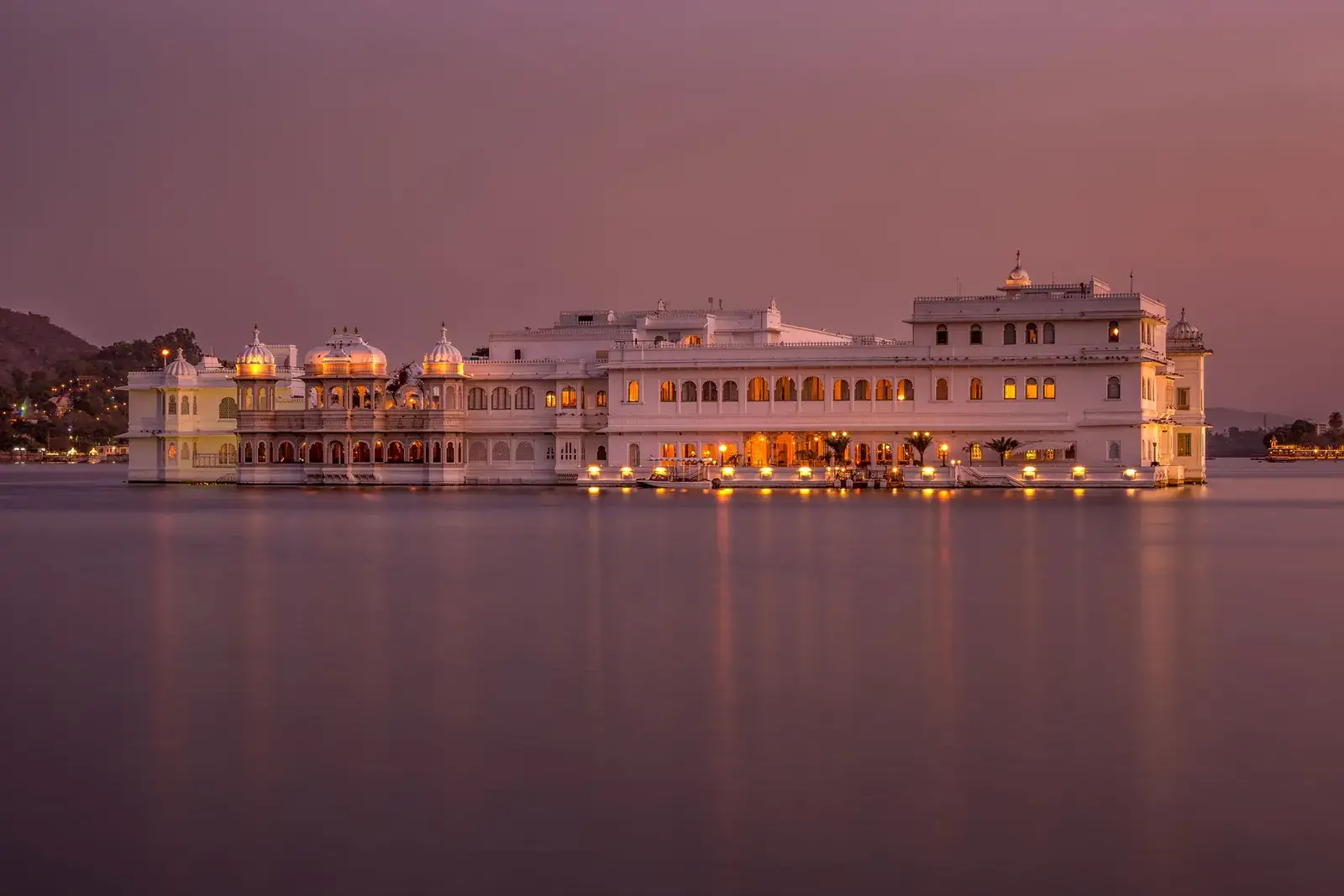
The result is the City of Lakes: the City Palace rising above Lake Pichola, white palaces on islands in the water, and old lanes of havelis, temples and ghats running down to the shore. It is compact — the main sights are within a few kilometres of each other.
From Rajkot the road runs by way of Ahmedabad, then north on NH-48 through Himatnagar and Shamlaji into the Aravalli hills. It is a long day in the car, so most people stay at least two nights.
The City Palace and Lake Pichola
The City Palace is the largest palace complex in Rajasthan, built and added to by the rulers of Mewar over some four centuries. Its museum runs through courtyards, mirror-work rooms and balconies looking down on the lake. It is usually open from 9:30 AM to 5:30 PM; tickets are tiered, so check the current price at the gate.
Lake Pichola is older than the city — it was dug in the 14th century and later enlarged by Udai Singh. Boats leave from the jetty beside the City Palace, pass the Lake Palace hotel and stop at Jag Mandir, the island palace where the young Shah Jahan is said to have taken shelter. The sunset boat is the one to book, and it sells out in season.
In the evening, the Dharohar show at Bagore ki Haveli, on Gangaur Ghat, puts on an hour of Rajasthani folk dance and puppetry from 7 PM. Tickets go on sale at the haveli from about 6:15 PM, so arrive early in season.
The rest of the city
Jagdish Temple, a few minutes’ walk up from the City Palace, was built by Maharana Jagat Singh in 1651 and is still the city’s busiest temple. Expect steep steps and finely carved stone.
North of the old city, Fateh Sagar Lake is where Udaipur goes in the evening, with a long lakefront road and the Maharana Pratap memorial on Moti Magri hill above it. Saheliyon ki Bari, nearby, is an 18th-century garden of fountains, pools and marble elephants, made for the ladies of the court.
Sajjangarh, the Monsoon Palace, stands on a hilltop west of the city, built in 1884 by Maharana Sajjan Singh. It is inside a wildlife sanctuary, so private cars stop at the gate and a shared vehicle goes on to the top. Go for sunset, when the whole valley of lakes is below you.
Day trips and the drive
Nathdwara, the home of Shrinathji, is about 48 km north — an hour’s drive, and for many Gujarati families the real reason for the trip. Darshan opens in short slots through the day, so plan the drive around them. Eklingji, the family temple of the Mewar rulers, is on the same road.
With a third day, the hill fort of Kumbhalgarh — its wall runs for some 36 km — and the Jain temple at Ranakpur, with its 1,444 carved pillars, make a long day out, about two to two and a half hours each way. Chittorgarh, the old Mewar capital, is about 115 km east.
Our two-day Udaipur tour starts from Ahmedabad; from Rajkot we suggest three days, with the long drive on the first and last. For a family of four to six, an Innova Crysta is comfortable for the distance, and the 13-seat Urbania suits larger groups.
When to go
- October to MarchBest timeThe best months: pleasant days, cool evenings on the lakes, and every boat and sight running. December and January are the busiest.
- Diwali and New YearFestivalThe city is lit up and hotels fill fast. Book rooms and the car well ahead.
- July to SeptemberMonsoonThe lakes fill and the hills turn green. Lovely if you do not mind showers, and the best time for the view from Sajjangarh.
- April to JuneHotVery hot, and in a dry year the lakes run low. Keep sightseeing to the mornings and evenings.
Getting there · Plan this trip
Ahmedabad to Udaipur — fares and drive time
We drive this route regularly, with fixed all-inclusive fares and a driver who knows the road.
Sedan, one way from ₹3,500