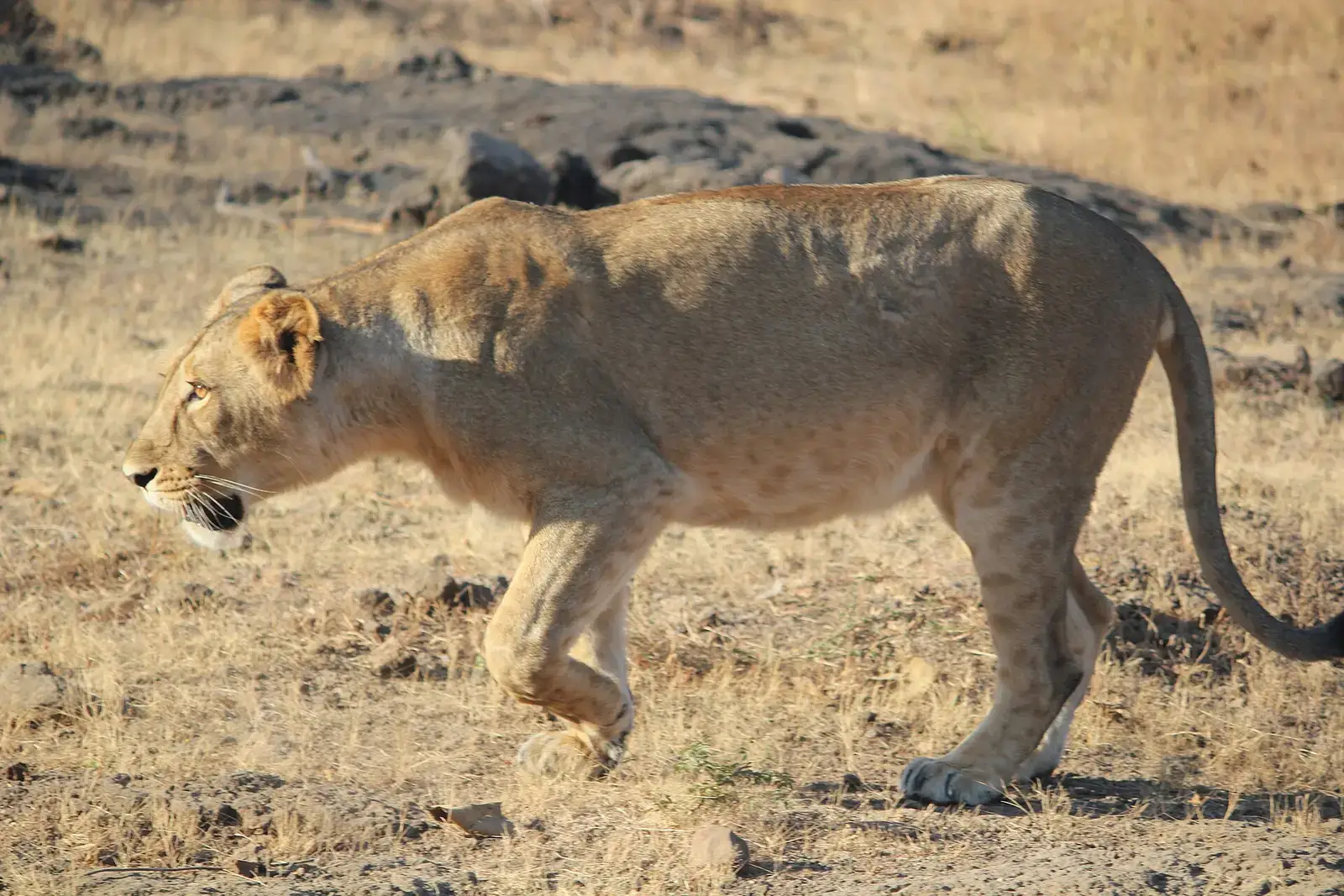
Gir is the last wild refuge of the Asiatic lion. They once ranged from Turkey to eastern India; what survives is a single population in this one forest in Saurashtra, brought back from a few dozen animals at the start of the twentieth century by the Nawab of Junagadh, who banned hunting them on his land.
That history is the reason a Gir safari feels different from a tiger park. You are not looking for an animal that happens to live there — you are in the only place it lives at all.
It is also a park that rewards planning and punishes turning up. Permits are limited and booked ahead, the park closes for a third of the year, and the difference between a good visit and a wasted drive is mostly decisions made a fortnight earlier.
Sasan Gir or Devalia — they are not the same thing
Two different experiences share the name, and people book the wrong one all the time.
Sasan Gir is the real thing: a jeep safari into open forest on a fixed route, with a guide and a driver, and no guarantee of a sighting. That uncertainty is the point. Lions are found on most trips but not all, and what you see in between — nilgai, sambar, crocodiles at the river, the occasional leopard — is a large part of the value.
Devalia, properly the Gir Interpretation Zone, is a fenced enclosure a few kilometres away, toured in a bus. Animals are effectively guaranteed. It is shorter, cheaper, easier to get into at short notice, and far better for young children or anyone who cannot face a 6 am start. It is also not a wild safari and does not pretend to be.
Most people who are making the journey from Rajkot do Sasan Gir, and add Devalia if a booking falls through or they have a spare morning.
Permits are the whole game
Safari permits are issued in limited numbers per slot and booked in advance through the Gujarat Forest Department’s official online system. In peak season — the winter months, weekends and holiday weeks — they go well before the day.
Book yours directly on the official site rather than through an intermediary, and do it as early as your dates allow. Every visitor in the vehicle needs photo ID matching the booking, and it is checked at the gate.
Slot times, permit fees and the number of vehicles allowed change from season to season, so take those from the official booking site at the time you book rather than from any guide, this one included.
What a morning actually looks like
Safaris run in fixed slots, the first starting around dawn. You will be at the gate well before it in the dark, which is why staying the night nearby rather than driving from Rajkot that morning is close to essential.
A jeep carries six with a forest guide and a driver who both know the routes and the individual animals. Trips last a couple of hours over a set beat — you do not choose where to go, and the driver is not permitted to leave the track.
The forest is dry deciduous: teak, acacia, open scrub and dry riverbeds. It is more open than a tiger reserve, which makes spotting easier, and the light in the first hour is the reason photographers come.
Around Gir
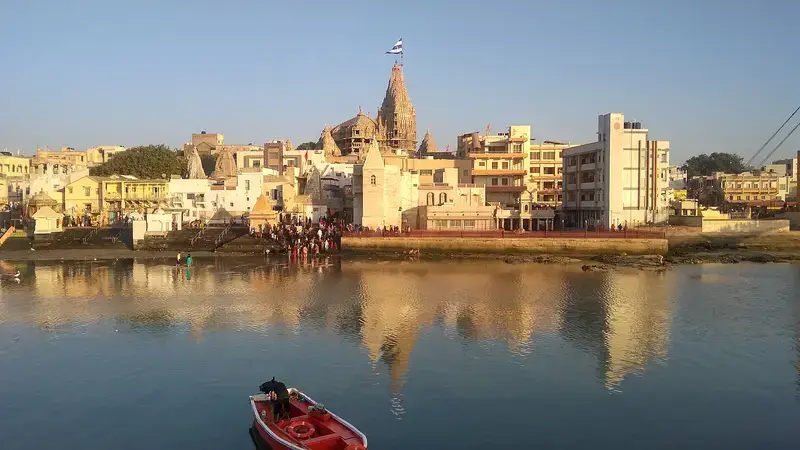
Junagadh is about an hour away and worth a day of its own — Girnar hill with its ropeway, the Uparkot Fort, and the Mahabat Maqbara, which is among the strangest and finest buildings in Gujarat.
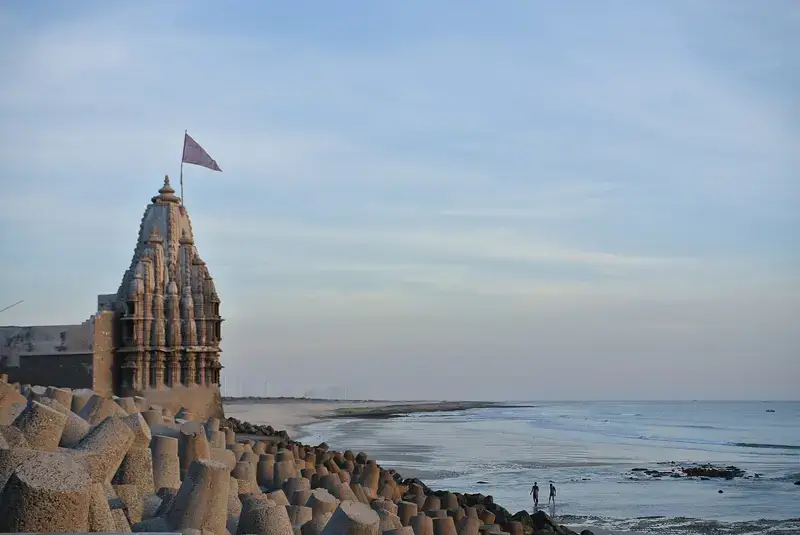
Somnath is roughly two hours south, which makes the pairing obvious: a safari morning and a temple evening are a comfortable two-day trip from Rajkot.
Devalia, the crocodile breeding centre, and the Kamleshwar dam are all within a short drive of Sasan and fill an afternoon between safaris.
When to go
- December to MarchBest timeThe best window. Cool mornings, comfortable afternoons, good visibility, and animals active for longer. It is also the busiest, so permits need booking furthest ahead.
- October and NovemberBest timeThe park reopens after the monsoon into thick green forest. Lovely to look at, slightly harder for sightings because there is more cover.
- April and MayHotHot, often severely so by midday, but sightings are at their most reliable — animals concentrate around the remaining water. Early slots only.
- Mid-June to mid-OctoberMonsoonClosed for the monsoon and the breeding season. Dates shift a little each year; check before planning anything around them.
Getting there · Plan this trip
Rajkot to Gir — fares and drive time
We drive this route regularly, with fixed all-inclusive fares and a driver who knows the road.
Sedan, one way from ₹3,000